Community
September 2026
The Reinvention

About this article:
Our Field Notes series shares in-the-trenches, first-person perspectives from the frontlines of marketing, creativity, and leadership. These reflections are shaped by lived experience and challenge the status quo — offering fresh ways of thinking about the work.
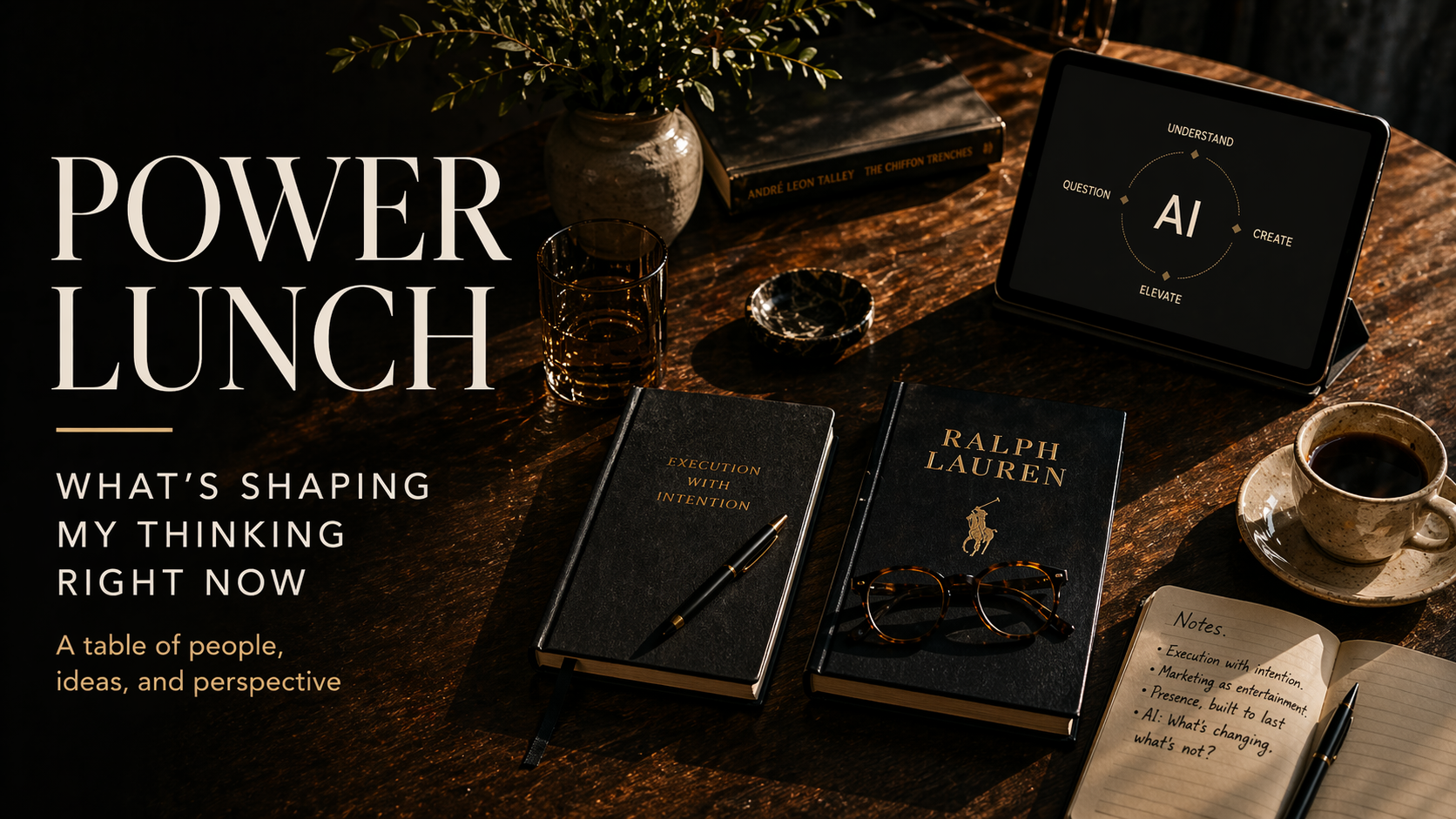
Digital Summit gave me the assignment of putting together my dream power lunch. For me, the guest list is really a reflection of what’s influencing my thinking right now—what I’m paying attention to, what I’m learning from, and what’s shaping my perspective.
I’ve always learned by paying close attention to people doing exceptional work. Putting this table together feels like an extension of that: being intentional about the people and ideas that continue to shape how I see the work.
Along the way, I’ve worked alongside—and helped build with—founders and leaders committed to building brands that stand the test of time. One thing has become clear: the brands that endure aren’t chasing every moment. They’re built with intention from the start and show up in culture in a way that remains true to who they are.
That’s the lens I bring to the work now—and why this exercise didn’t feel new. As a marketer, I’m constantly paying attention to what’s happening, what’s resonating, and what’s worth learning from.
When I think about who belongs at my table, it’s a mix of people and ideas—each one shaping how I think about the work: how it’s built, how it shows up, how it connects, and how it ultimately stands out.
Emma Grede — Execution, with Intention
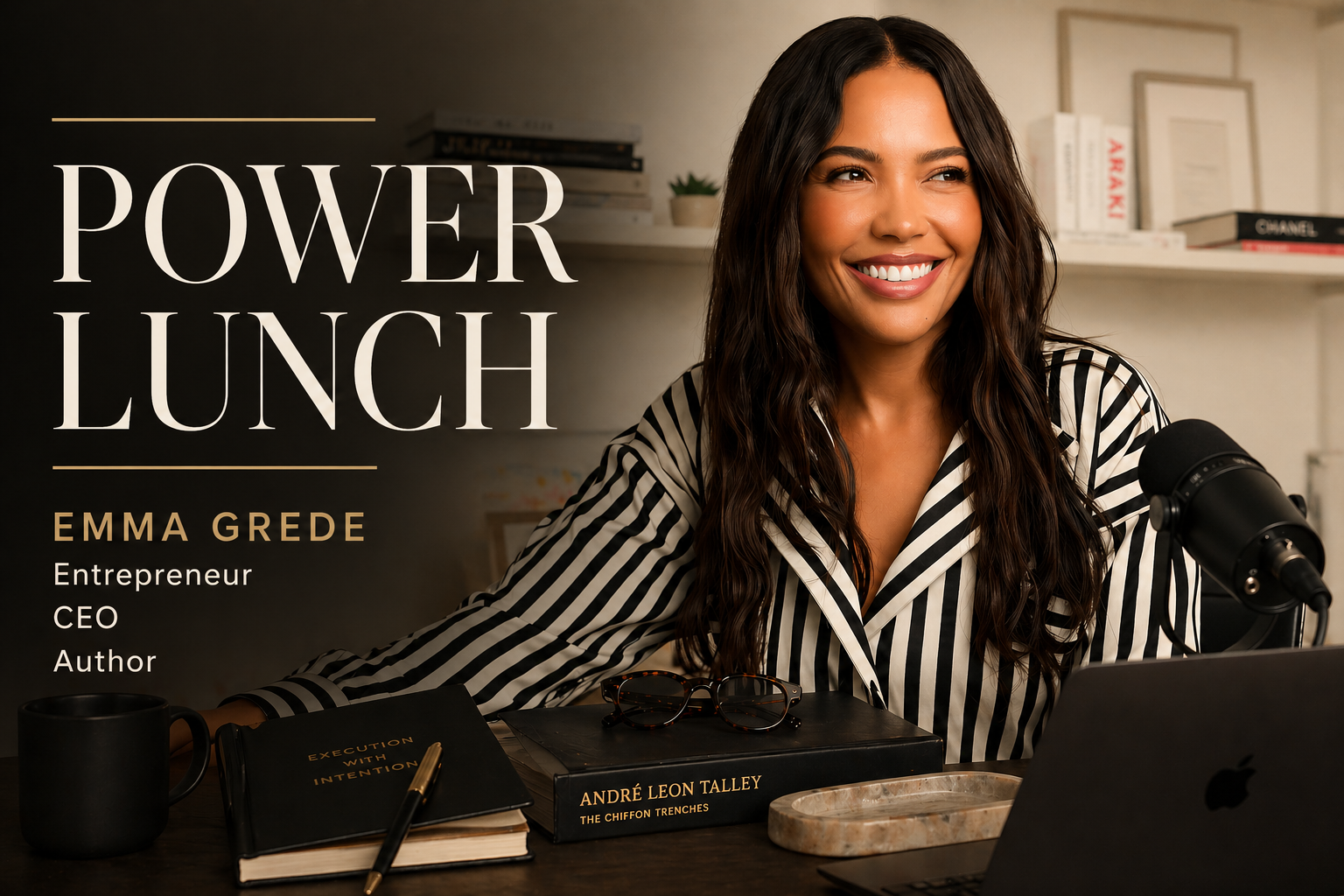
The co-founder of Good American and a founding partner of SKIMS is someone I had the opportunity to work with when I led brand at Good American. What stands out most about Emma is the work. There’s a clarity to how she operates—she sees a gap, builds what’s missing, and executes with a level of focus that makes her vision hard to ignore. It’s not complicated; it’s disciplined, consistent execution.
Working with her, what struck me was that even with all of her success, Emma remains a student. She continues to learn, ask questions, and stay focused on what matters most—the work itself. And she consistently shares what she’s learning—through conversations, her podcast Aspire, and the resources she creates.
You see that same mindset in her recent book Start With Yourself—the idea that no one is coming to figure it out for you. You have to decide, move, and take responsibility for what happens next. It’s direct, practical, and closely aligned with how she shows up in real life.
And then there’s the intention behind the work.I came across a clip from Carla Harris where she said, “perception is the co-pilot to reality,” and it stuck with me. Because a big part of the work—especially in marketing—is understanding how it’s received, not just how it’s intended.
How you show up, how you communicate, and how people interpret it—those are all part of the work. For me, it comes down to both: execution is the work itself, but intention determines how that work lands. And the people who move things forward understand that you need both—but it always starts, and ends, with the work.
The Shift — Marketing as Entertainment, at Scale 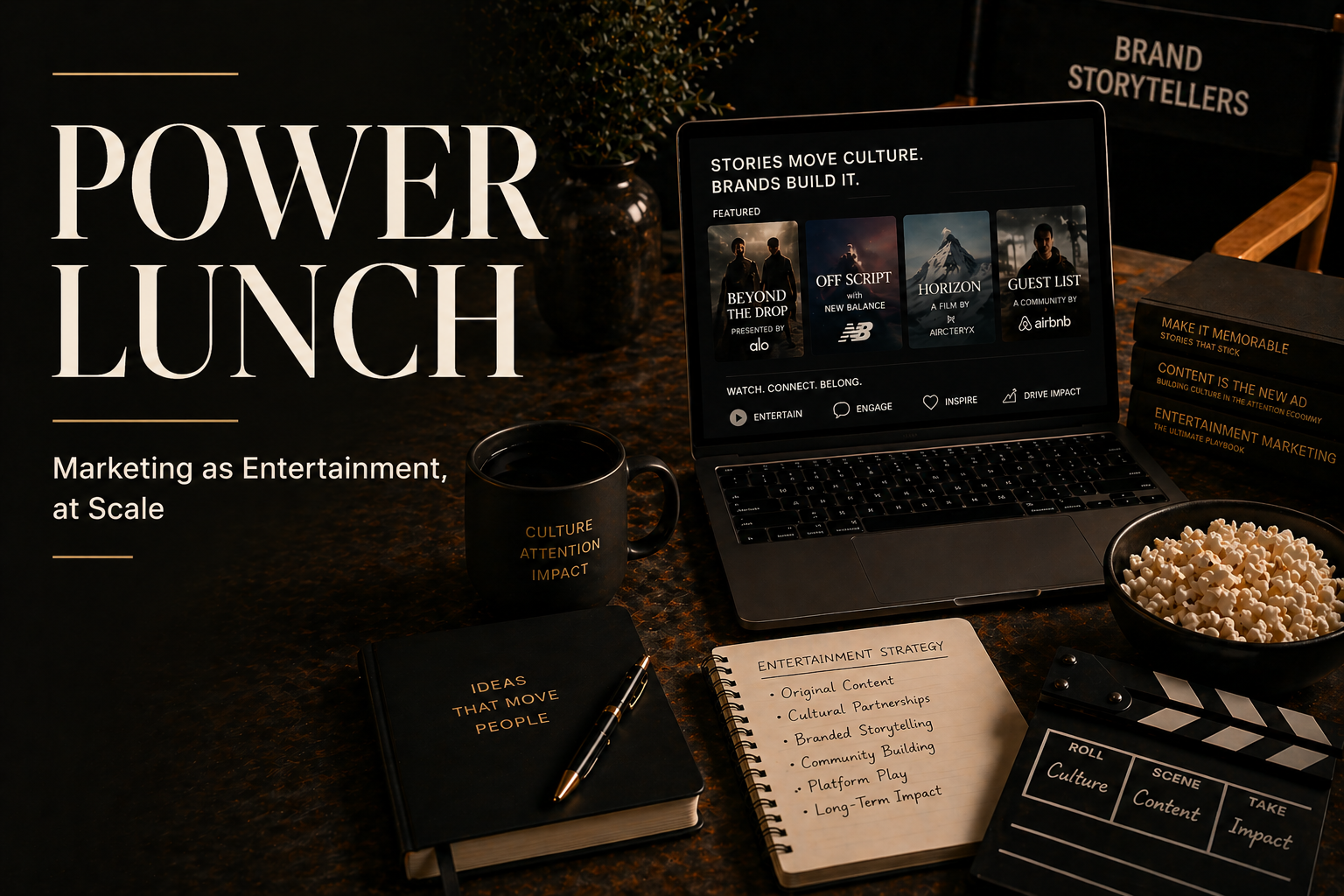 For me, the table isn’t just a collection of people; it's also the ideas shaping how I see the industry right now(inspired by Gap’s hire of Pam Kaufman from Paramount as Chief Entertainment Officer). This is a shift I keep coming back to: Marketing has always been about entertaining, engaging, and educating an audience. What’s changing is the level of intention—and investment—behind it. It’s no longer just about the product.
Brands are competing for attention, emotion, and cultural relevance. The ones that stand out aren’t just marketing—they’re showing up in the entertainment people are already watching, or creating their own.
You see it everywhere: brands are building content series, producing films, and creating platforms where people can engage, not just scroll past. That shift—from counting impressions to cultivating real engagement—is shaping how I think about the work right now.
André Leon Talley & Ralph Lauren — Presence, Built to Last
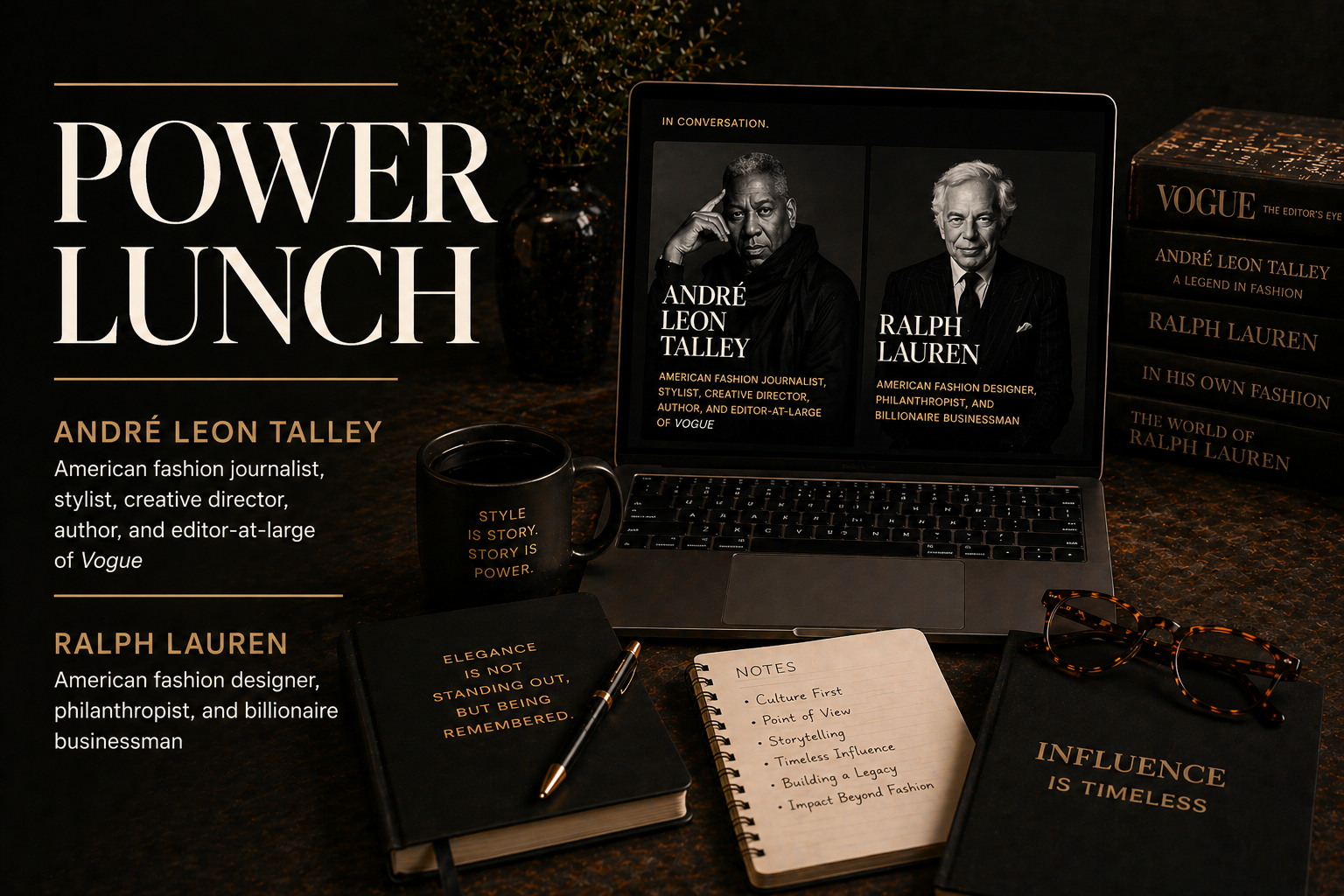 Two iconic figures have shaped how I think about brand—and how we show up within it. Reading André Leon Talley’s autobiography, The Chiffon Trenches, is a reminder that he didn’t just enter rooms—he expanded them. His presence was undeniable, but what made it endure was everything behind it: the knowledge, the preparation, the relationships. He showed up fully, unapologetically, and earned the space he took.
Ralph represents a different, but equally important, discipline. Watching Very Ralph, what stands out isn’t just the origin story—it’s the consistency, the restraint, and the ability to define something early and protect it over time.What connects both of them is that they didn’t just build brands—they built identities. And in many ways, that’s the work now. We all have to think about how we show up, how we stand out, and what we’re building over time.
Looking at what they’ve left behind—through books, films, and the brands themselves—there are lessons everywhere. Put together, they’re a reminder of something that feels especially relevant: presence gets attention—but discipline is what makes it last.
AI — What’s Changing, What’s Not?
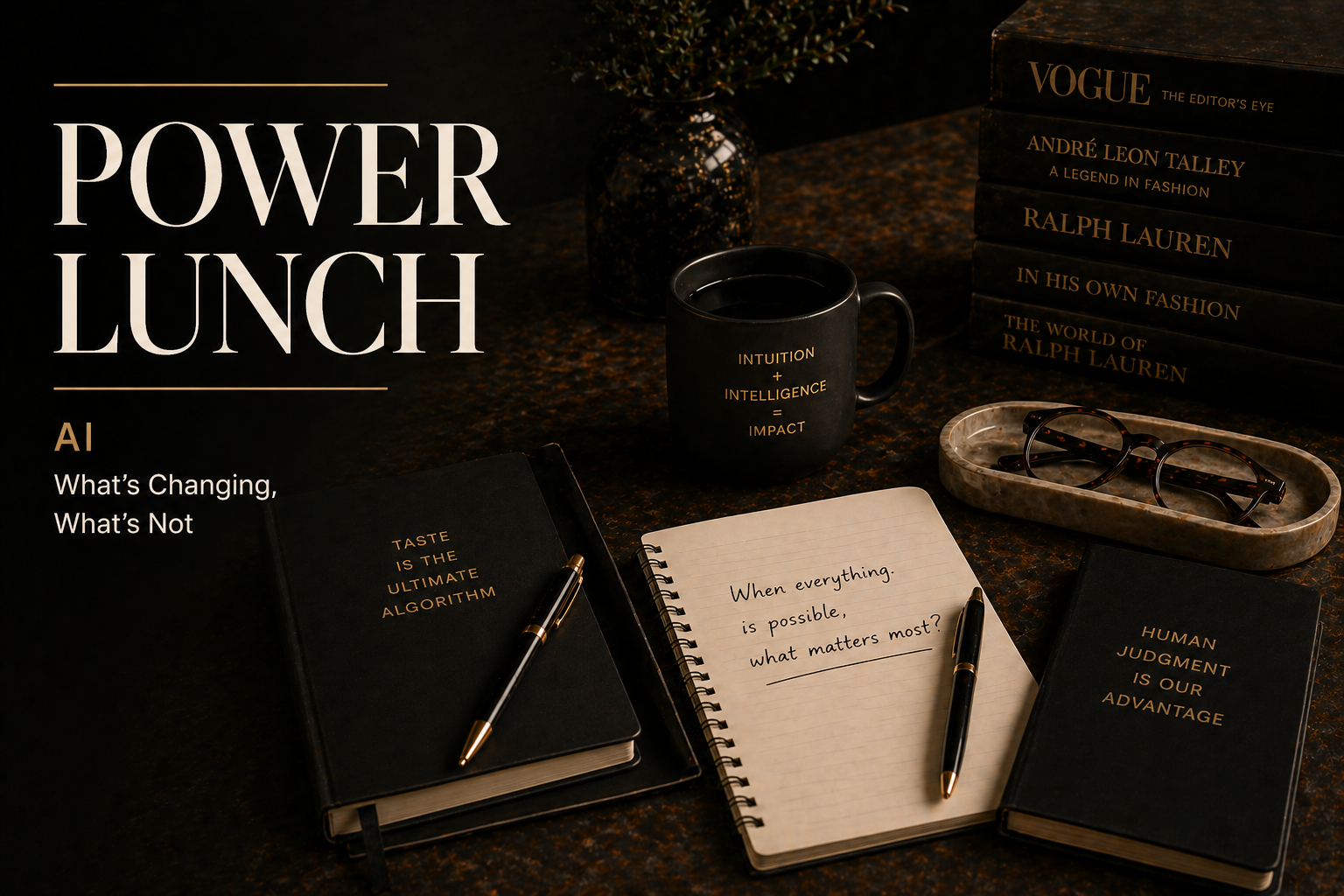 To round out the table, I’m bringing in one more thing: an idea that’s shaping how I think right now. There’s a lot of conversation—and a lot of fear—around AI, and I understand why. But the things that feel uncertain are usually the ones worth taking the time to understand.
So I’ve invited it to the table—to learn it, question it, and figure out where it fits—and where it doesn’t. We’re entering a moment where AI can generate almost anything—images, campaigns, ideas—faster than ever.
While that changes how things get made, it raises a different question: how do you use it to be sharper, not just faster?
Because when everything is possible, taste becomes the differentiator. The brands that win won’t just be fast,they’ll have a clear point of view. Across this table, a clear pattern emerges: The people and ideas that stay with me are the ones willing to take a different approach—and then commit to it over time. They stay curious, challenge what they know, and seek out perspectives that sharpen their thinking—even when those perspectives don’t immediately align.
At the core of it all is a commitment to the work—and the consistency required to build something that lasts. And if there’s one thing I hope people take from this, it’s that you don’t need to have everything figured out to get started. What matters is the judgment to know what’s worth pursuing, the discipline to follow through, and the openness to keep learning along the way.