Editor’s Note
This article is adapted from the Marketing Happy Hour podcast, a weekly show helping marketing professionals build better strategies and hit career goals. Cassie Tucker is an independent marketing consultant and podcast host. Her perspectives are her own and do not represent an endorsement of Digital Summit or its partners. She is not an employee of Digital Summit and was not compensated to promote the event.
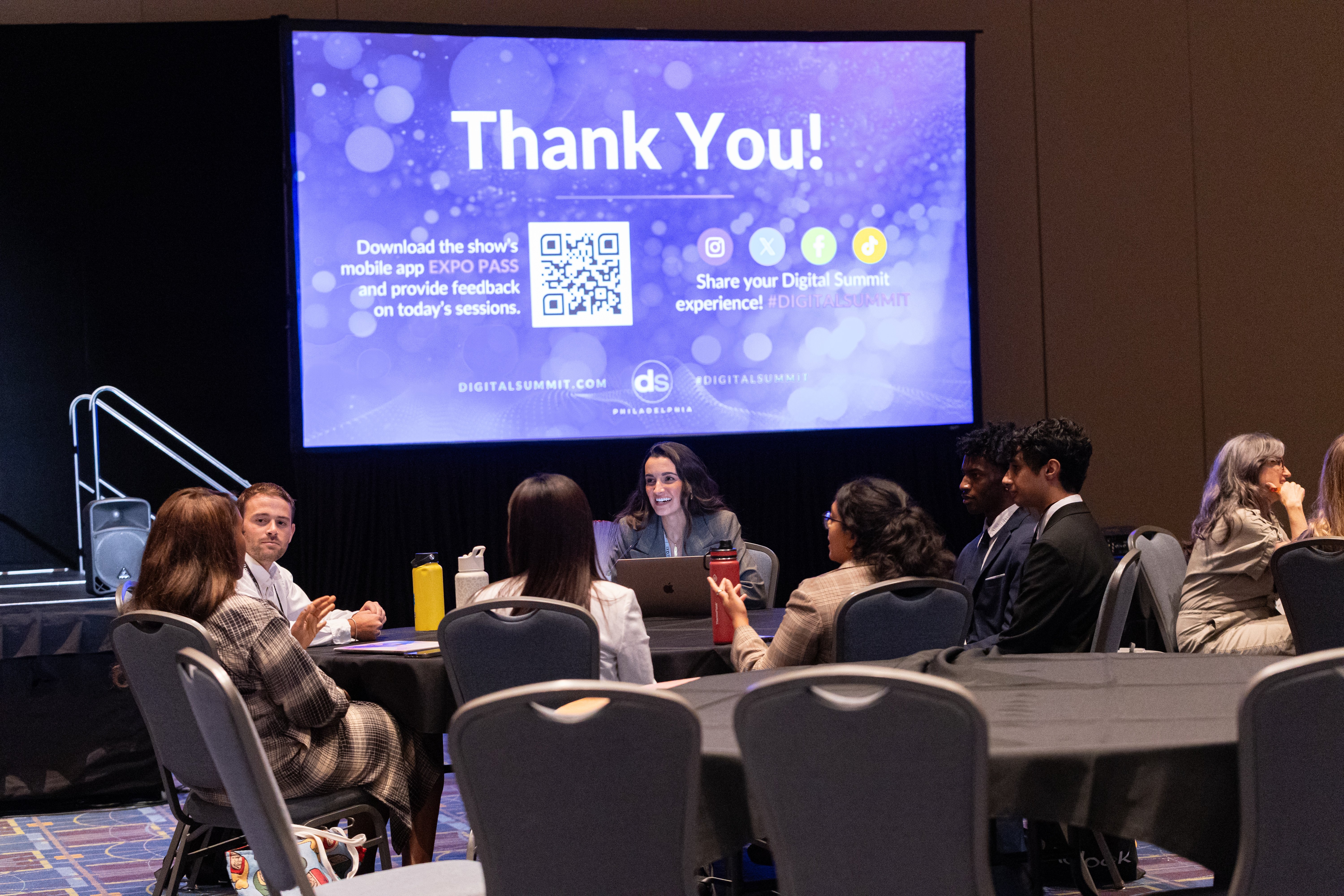
At last year’s Digital Summit Philadelphia, something felt different. The conversations weren’t centered on shiny new tools or speculative trends — they were grounded, honest, and occasionally uncomfortable. After a year defined by rapid AI adoption, algorithm upheaval, and fragmented audiences, marketers weren’t asking what’s next. They were asking what actually works.
The result was a collective recalibration. The dominant message across sessions was clear: it’s time to get intentional.
Here’s what stood out.
AI Is a Creative Partner and Not a Content Factory
The AI conversation has matured. Futurist David "Shingy" Shing opened the conference with a statement that cut through the noise: “Imagination is the future, not data.” In a room full of digital marketers, it landed hard.
AI-generated content is becoming easier to spot, and audiences are increasingly tuning it out. The issue isn’t production quality; it’s depth. Strategy, storytelling, and emotional intelligence don’t come from prompts alone. They come from people.
The brands seeing success are using AI to accelerate research, test ideas faster, and handle repetitive tasks — not to replace creative thinking. Shingy reinforced this by introducing a brainstorming method he calls brain cycling: teams write ideas by hand, rotate seats, and build on each other’s thinking without speaking. There were no screens, no tools — just people relying on their own imagination and each other.
In a conference focused on digital innovation, that analog exercise felt quietly radical.
Instagram Is No Longer a Follower-First Platform
Meredith Howard from Deloitte reframed how marketers should think about social strategy today. Instagram, she explained, is now a hybrid experience: part follower feed, part AI recommendation engine, part search platform.
What this really means is that most people seeing your content don’t know who you are.
That reality changes everything, because you can no longer assume context or familiarity. Every post needs to work as a first impression — clear, compelling, and valuable within seconds — or users will scroll past.
The upside is increased discoverability. The downside is that building community with existing followers requires more effort. The solution is balance: create content that hooks new viewers while still rewarding those who already know your brand.
Howard also emphasized focusing on the right metrics. Likes and follower counts are low-signal indicators, but what really matters now are completion rates, saves, shares, and thoughtful comments — the behaviors that indicate real engagement and drive algorithmic value.
Stop Targeting Demographics. Start Targeting Interests.
One of the most cited examples across sessions was deceptively simple: King Charles and Ozzy Osbourne share nearly identical demographic profiles — same age, same country — and virtually nothing else.
Demographics no longer predict behavior, but interests do.
Rather than building personas around age, income, and gender, marketers are being encouraged to identify two or three interest clusters their brand wants to own, and create content around those themes consistently. Algorithms already operate this way, so the time for marketing strategy to catch up is now.
This shift also opens the door to broader reach. Two people who look nothing alike on paper may respond to the same message if their passions align. Interest-based thinking isn’t just more accurate — it’s more human.
National Geographic Shows How Legacy Brands Stay Relevant
Few brands carry as much cultural weight as National Geographic — and few face as much pressure to evolve. Managing 36 social channels, the Nat Geo team shared how they’ve moved from reverence to relevance without losing their identity.
Their strategy centers on collaboration and curiosity. They partner across the Walt Disney ecosystem, tap into pop culture moments, and work with talent who genuinely love the brand. Influencer discovery often starts with something simple: daily scrolling.
Perhaps most importantly, they ask their audience what they want. One Instagram prompt generated their highest-performing content ever — a reminder that relevance isn’t something brands declare, rather, it’s something audiences grant.
Evolution doesn’t mean abandoning your values. It means expressing them in ways that resonate now.
Humanization Isn’t Optional
Nearly every session circled back to the same underlying truth: as technology accelerates, the desire for human connection hasn’t gone away — if anything, it’s intensified.
What that looks like in practice isn’t flashy or complicated. It’s brands taking the time to show up in conversations instead of broadcasting at audiences. It’s responding thoughtfully in comments, engaging in DMs, and letting real people — founders, employees, customers — be visible in the work. It’s choosing not to automate every touchpoint simply because it’s possible.
There was a clear acknowledgment throughout the conference that while tools will continue to evolve, connection is still built in small, human moments. The brands that stood out weren’t the most technologically advanced; they were the ones that made people feel seen, heard, and understood.
Technology can support that effort. It can’t replace it.
My 2026 Marketing Roadmap
Digital Summit Philadelphia didn’t offer a step-by-step roadmap for the future — it offered clarity.
-
Use AI, but don’t let it do your thinking
-
Create for discovery without abandoning community
-
Target interests, not demographics
-
Stay true to your brand while staying curious
And above all, stay human.
The marketers who succeed in 2026 won’t be the ones chasing every trend. They’ll be the ones who know what to ignore — and what to double down on.
Want to hear more from Cassie and Marketing Happy Hour?