Editor’s Note:
This article is part of a Digital Summit Collective series where we’re turning standout live sessions from recent Digital Summit events into actionable, on-demand insights for our community. Each piece is adapted from a real stage presentation—capturing the ideas, examples, and strategic thinking that resonated most with attendees.
Marketers spend enormous energy optimizing customer journeys—reducing friction, improving usability, and smoothing paths to conversion. But at Digital Summit Chicago, one session challenged that default mindset with a simple idea: brands don’t become unforgettable by removing friction alone. They become irresistible by creating an emotional connection.
That shift reframes where real value is created. Emotional connection is often less expensive, more durable, and far more impactful than incremental optimization—but only if brands understand where emotion lives in the experience and how to design for intentionality.
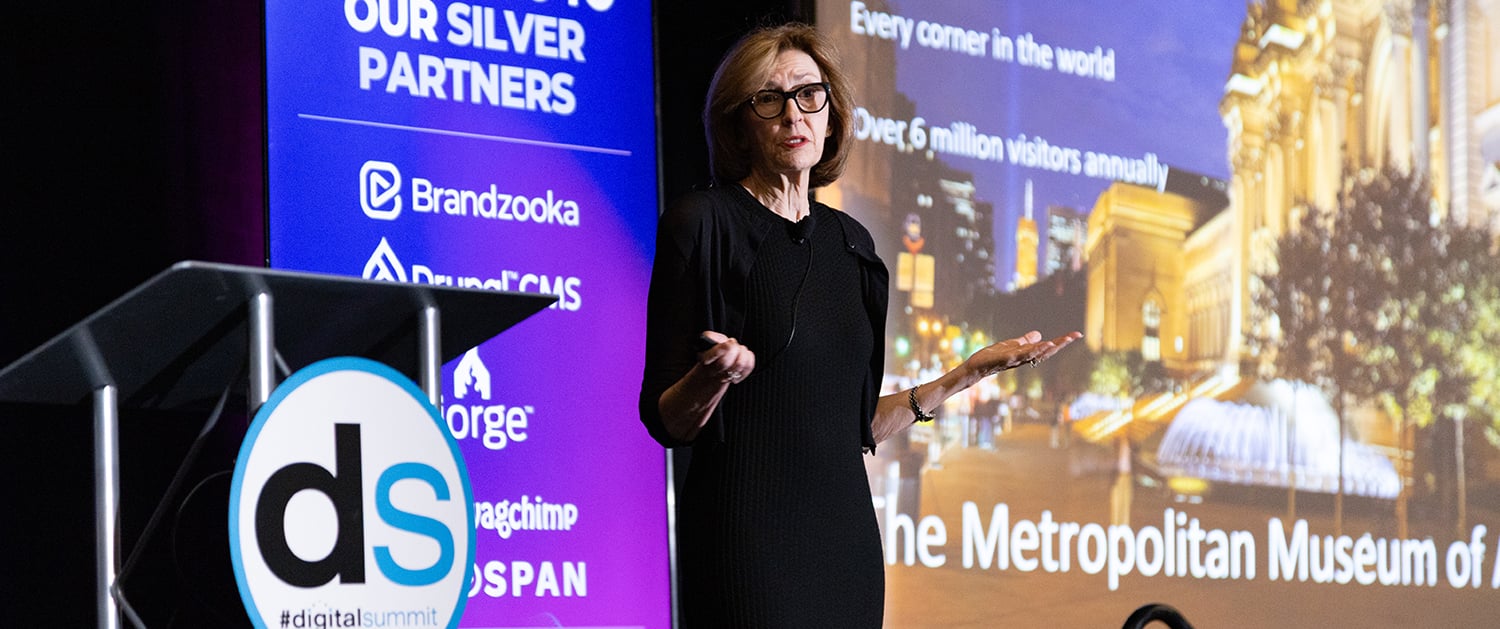
To bring this idea to life, the session explored a compelling case study: the brand transformation of the Metropolitan Museum of Art.
The Question Every Brand Must Answer
Every brand that earns loyalty can answer one foundational question: How is this brand significant in the lives of its most loyal users?
Not in demographic terms. Not through dashboards alone. But emotionally.
When the Met began examining its brand, it was already successful by traditional measures: 150 years old, 5,000 years of art, and roughly six million annual visitors. At the same time, there was an internal push to make the museum more open and accessible to a broader audience.
The goal wasn’t just to attract more visitors. It was to make the museum feel like a place where anyone could see themselves reflected and welcomed.
Why Loyal Users Hold the Key
Rather than focusing on non-users, the Met centered its research on loyal visitors through interviews, focus groups, and ethnographic observation. What emerged was a stark contrast between perception and reality.
While museums are often associated with quiet halls and academic learning, loyal visitors described feelings of wonder, curiosity, and awe. One moment captured it perfectly. Standing in the Greek and Roman galleries, a visitor said:
“When I’m at the Met, I can place myself in the stream of humanity.”
That insight became the emotional anchor for everything that followed.
Try this:
✔ Run quick interviews or surveys with your most loyal users to uncover the feelings, memories, or ideas your brand triggers for them.
A Brand Idea Rooted in Humanity
From that research came a unifying brand truth: the Met brings art to life and brings art into more lives.
This wasn’t about making the museum more educational. It was about making it more human. More approachable. More alive.
That single idea became the lens for decisions across identity, experience, digital strategy, and culture.
Try this:
✔ Reframe your brand work around real human contexts — not just demographic profiles — by mapping moments where your brand intersects with people’s aspirations, curiosities, or identities.
Turning Strategy into Experience
The institution embraced what people already called it—the Met, making the brand instantly more familiar. A new visual identity replaced a Renaissance-era symbol with a connected wordmark reflecting the interconnectedness of cultures across time.
But the most meaningful changes weren’t visual.
All 2,200 employees were invited to act as brand stewards, asking how their role could help bring art alive. Security guards became Directors of First Impressions. Small shifts like multilingual greeting buttons transformed entry from a checkpoint into a welcome.
Try this:
✔ Audit how your brand strategy shows up in real-world interactions, not just visuals or messaging. Ask every team how their role contributes to the experience customers actually feel—and empower them to make small, human changes that turn transactions into moments of welcome.
From Visitors to Users
One of the most provocative ideas behind the transformation was this: what if people didn’t just visit the museum—what if they used it?
This question reshaped the Met’s digital strategy. With roughly 30 million annual website visitors, most of whom would never visit in person, the site became a primary brand experience, not a planning tool.
Hundreds of short-form videos featured contemporary artists sharing how art inspires them personally. The message was simple and powerful: there’s no single “correct” way to experience art, but your perspective matters.
Try this:
✔ Stop designing for one-time attention and start designing for repeated use. Treat your digital presence as a primary brand experience by creating content or tools people can return to, interpret in their own way, and integrate into their everyday lives.
Perforating the Walls
Programs like Teens Take the Met handed the museum over to young audiences, fostering ownership and emotional connection early. Friday nights were reframed as New York’s Night Out, reclaiming the museum as a cultural and social space.
Many of these initiatives required little incremental budget. Their success came from alignment with the brand’s emotional promise—not scale.
Try this:
✔ Create moments that invite your audience to participate, not just observe. Look for existing programs, spaces, or time slots you can reframe to foster ownership and community—prioritizing emotional alignment with your brand over scale or budget.
The Impact of Emotional Connection
Within a year:
-
Annual visitors grew from 6 million to 7 million
-
Digital traffic increased by more than 2.5 million
-
The Met became the most visited attraction in New York City
-
It was named the world’s best museum three years in a row on TripAdvisor.
Those results weren’t driven by campaigns. They were driven by leaning into human connections.
Watch the Full Session
This article was adapted from the live session Beyond Relevant to Irresistible, presented Cynthia Round at Digital Summit Chicago.
Watch the full video:
https://resource.digitalsummit.com/resources/material/beyond-relevant-to-irresistible-chi25/