About this article:
Still Thinking is a personal reflection on what marketing leaders have chosen to keep doing themselves in an AI-everything world. The habits, rituals, and creative practices they are deliberately protecting.
I do my best thinking on airplanes.
There’s something about being sealed in at altitude, nowhere to be, no tool a click away ready to resolve whatever half formed thing my brain is chewing on. My mind finally gets the uninterrupted space it needs. Just me, a window seat, and whatever’s been quietly assembling itself in the farflung corners of my head.
I wrote about this in my book. About the science behind why our best ideas tend to arrive in the shower, on a walk, while doing the dishes. Our brains aren’t idle in those moments. They’re working without interruption, drawing connections between everything we’ve consumed and experienced, building what neuroscientist David Eagleman describes as combinations the neural circuitry has been working on for hours, or days, or years.
Now I really, really love AI.
I’ve worked in AI since 2015, back when I was at Microsoft and most marketers still thought it was science fiction. I’ve spent the years since writing about it, speaking about it and building GTM narratives for AI products. I use AI tools daily. I currently lead a global Applied AI workstream at LinkedIn.
Working so deeply with AI, I learned to protect something from it.
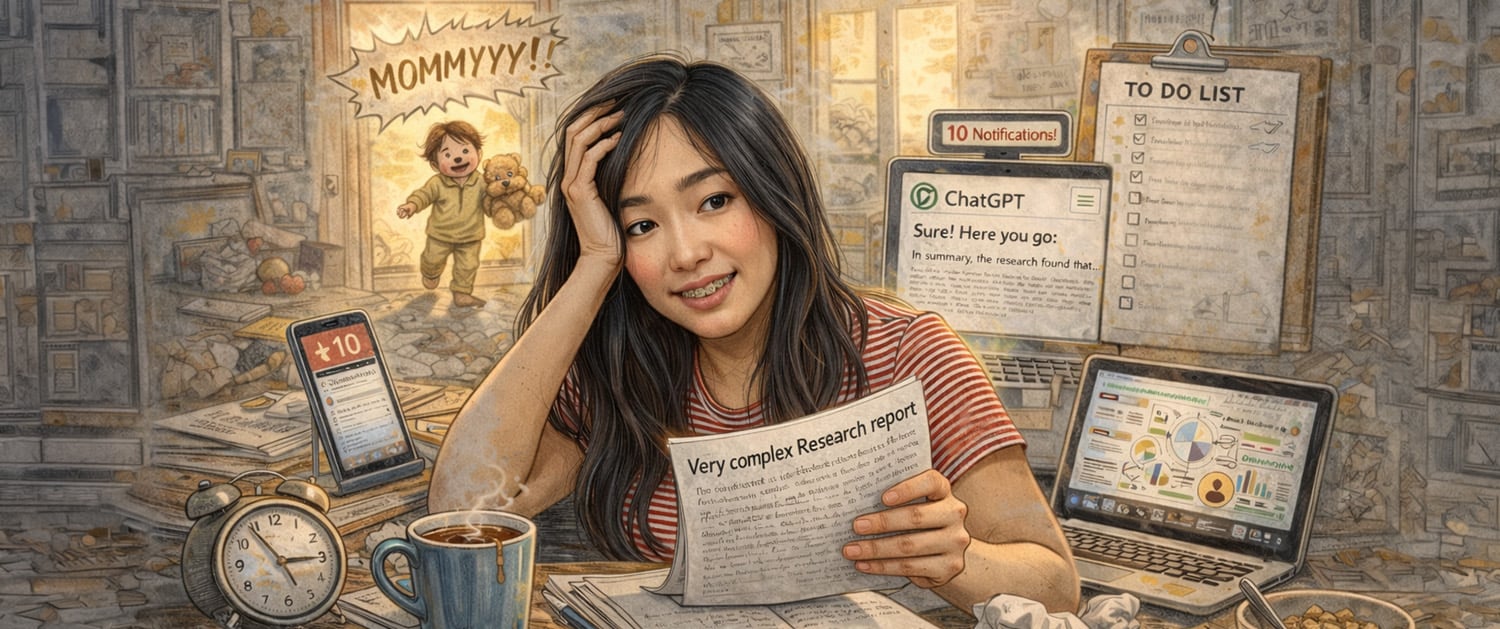
Last summer, I was preparing a keynote. Advanced level for a sophisticated audience with a lot of new data to integrate. I started writing and hit the wall every writer knows. That early draft moment where everything you’ve produced looks like utter garbage and you start questioning every decision that led you here.
So, I tried the easy way out. I had my AI assistant take a stab at it. It found research I’d missed, surfaced angles I hadn’t considered, and then it offered to outline the rest.
I let it.
The outline was good. So, I followed it. And somewhere along the way, I became the assistant editing what someone else was creating.
When I sat down to rehearse, maybe a minute in, I stopped. The talk was objectively great. It was well-structured, well-researched, and hit all the right beats. But it felt somehow hollow to me. Because it wasn’t mine.
Sure, I knew the material, but I hadn’t earned it. I’d been polishing AI’s architecture, not building my own. And my body knew before my brain caught up.
The best way I can describe it is like fast food. Quick, convenient, tasty. And then an hour later, nothing in you feels nourished.
I hadn’t done the real work. The confused, uncomfortable, what-feels-unproductive struggle of sitting with a half-formed idea long enough for it to become mine. The dots had been connected for me. And somewhere in the rehearsal, I could feel the difference between something I’d thought through and something I’d recognized as sounding right.
That gap is what I hadn’t protected.
It matters to me for reasons beyond pride. I write and speak because I love to teach. And as the saying goes, to teach is to learn twice. The learning lives in the process. In the incubation period where seemingly unrelated concepts start to find each other. Where you read something and feel a distant pull toward something else entirely. Where you wake up at 3am and finally understand what you’ve been trying to say.
So I slept on it.
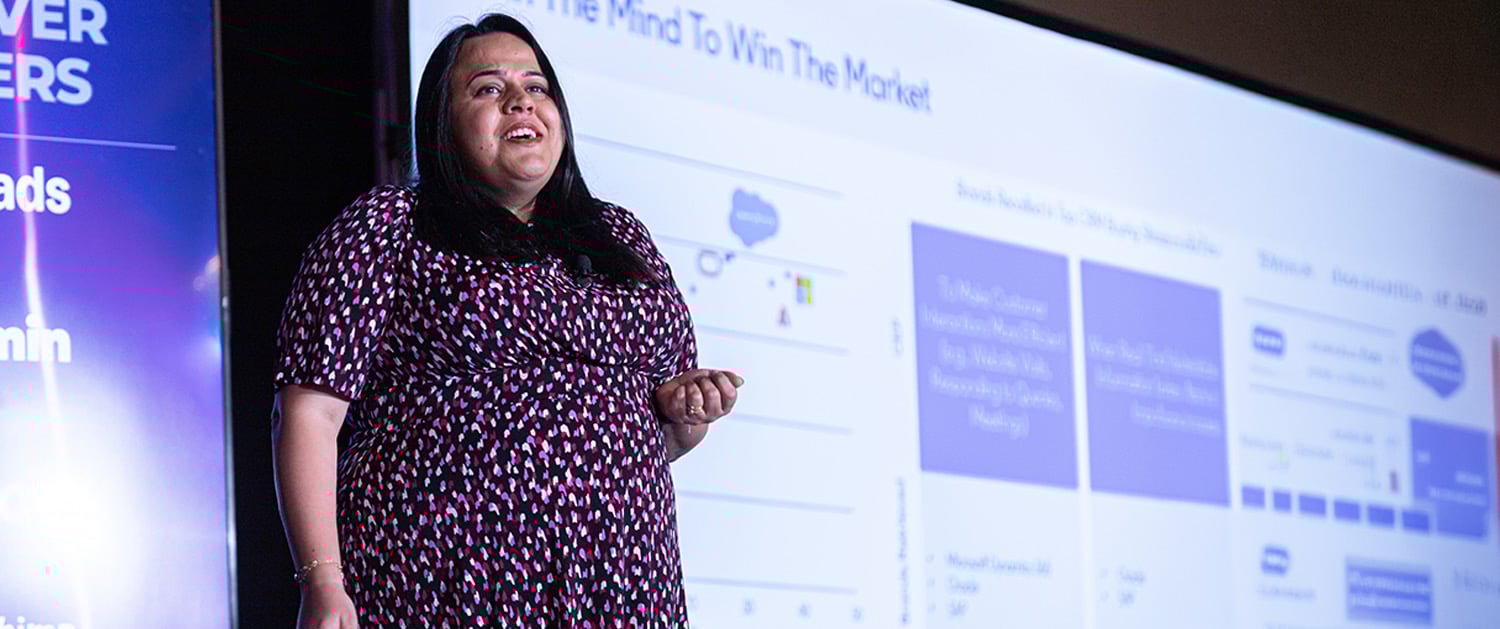
The next day, I rebuilt the talk from my own outline, using the AI’s research as raw material rather than scaffolding. It took longer. The early drafts were still garbage. But the talk was different. For me, it was better because it was mine. And that ownership showed up as confidence and conviction, something the audience could feel when I stood on stage and taught from it.
This isn’t a call to cling to analog ways of working. Quite the opposite.
AI is a genuinely brilliant thinking partner. I bounce ideas off it constantly. I use it to pressure test arguments, spot gaps in my reasoning, and expand my perspective. For someone who’s been building with AI for over a decade, it remains one of the most exciting tools I’ve ever had access to.
I’m leaning further in, not pulling back.
But I’ve learned to bring it in after I’ve formed a rough point of view. After I’ve made a few imperfect calls. After I’ve taken a position that might still be wrong, but is at least mine. And to build in pauses in the process.
That’s when it becomes a multiplier.
So I keep one small habit. Before I open that door, I wait just long enough to see what I might have said first. Long enough to notice the tension between two thoughts that don’t quite line up. Long enough for something vague to become specific enough to stand behind.
The pause is where I show up.