Community
September 2026
The Reinvention
.jpeg?width=48&height=48&name=Paxton%20Gray%20(1).jpeg)
Editor’s Note:
This article is part of a Digital Summit Collective series where we’re turning standout live sessions from recent Digital Summit events into actionable, on-demand insights for our community. Each piece is adapted from a real stage presentation—capturing the ideas, examples, and strategic thinking that resonated most with attendees.
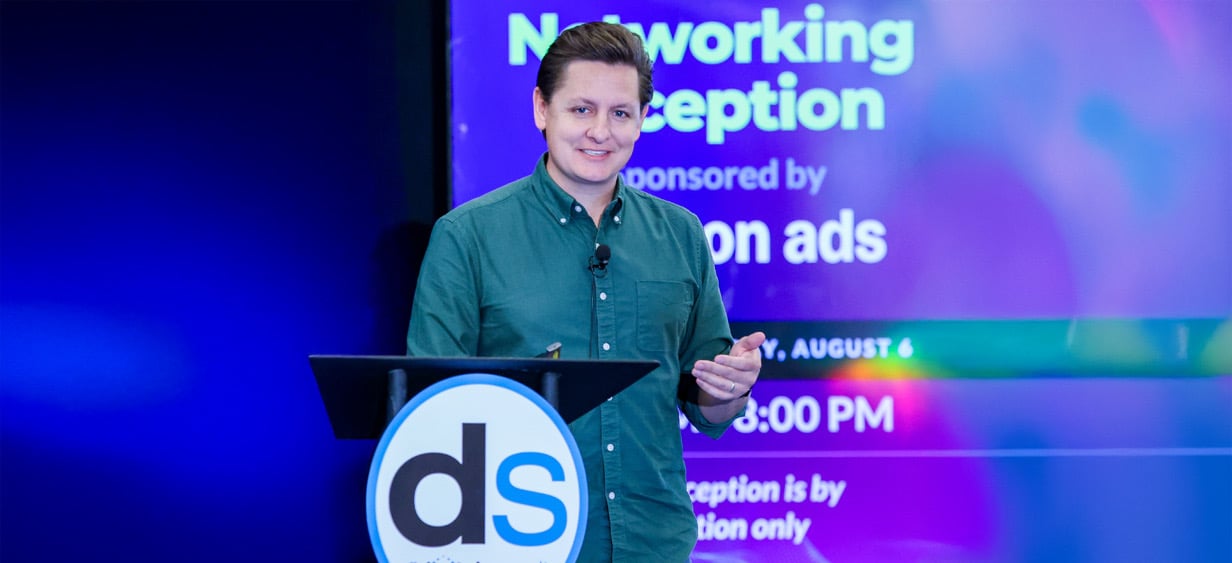
At Digital Summit Minneapolis, Paxton Gray opened with a tension most marketing leaders are navigating in real time. Organic traffic is declining. AI overviews are reducing click-through from search. Budget scrutiny is intensifying as CFOs take a more active role in performance evaluation. Meanwhile, content production across industries has accelerated dramatically, yet engagement metrics have barely moved.
On the surface, it feels like marketing has become less predictable and more fragile.
Gray’s perspective was more nuanced. The instability itself is not the problem. Rather, the real issue is that many teams have drifted away from their most defensible advantage: understanding their audience better than anyone else in their category.
When distribution platforms shift and automation becomes ubiquitous, the brands that outperform are not the ones producing the most content. They are the ones grounding their work in deeper audience clarity.
When Platform Strategy Replaces Customer Strategy
For years, search engines served as a reliable growth engine. Brands invested in SEO, produced content at scale, and captured demand through organic discovery. Over time, that system shaped internal incentives. Teams optimized for ranking signals. Content calendars revolved around keywords. Success was often defined by traffic volume.
But platform incentives evolve.
As AI-generated summaries increasingly answer search queries directly, referral traffic becomes less predictable. Algorithm changes can reallocate visibility overnight. When strategy is built primarily around feeding a platform, volatility becomes structural.
Gray framed this as a relationship imbalance. Marketing has always been about resonance—identifying customer tension and addressing it clearly. But in many organizations, optimization for algorithms gradually eclipsed optimization for people.
When the algorithm shifts, teams scramble. When audience insight anchors strategy, adaptation becomes far easier.
The difference is subtle but consequential.
Why More Content Hasn’t Delivered More Impact
Under tightening budgets, the instinct is to scale efficiently. Automation promises leverage. AI accelerates production. Publishing volume increases.
Yet industry research shows a consistent pattern: content output has grown exponentially while engagement has remained largely flat. In many brands, a small percentage of assets drives the majority of performance.
Gray’s interpretation was not that content is ineffective. It’s that average content, produced at scale, rarely creates differentiation.
Incremental optimization can improve cost efficiency at the margins, but it rarely creates step-change growth. What creates outsized results are what Gray calls “big informed swings”—creative risks grounded in deep audience understanding.
These are not reckless experiments. They are calculated departures from industry norms, backed by insight competitors are unwilling to invest in uncovering.
Reframing Marketing as a Portfolio
One of the more practical frameworks Gray shared was a portfolio model designed to resonate with financial leadership.
Rather than treating marketing as a uniform plan, he recommends allocating resources across three categories:
This distribution does two important things. First, it protects core revenue drivers. Second, it creates space for innovation without destabilizing the organization.
It also acknowledges that returns vary by funnel stage. Top-of-funnel initiatives may not deliver immediate 5X ROI, but they feed the pipeline that enables bottom-of-funnel efficiency. Without sustained awareness and experimentation, growth eventually plateaus.
By framing marketing decisions in portfolio terms, leaders can align risk tolerance with strategic ambition rather than defaulting to incremental optimization.
Insight as a Creative Multiplier
Gray illustrated the power of audience insight through a campaign for eos. Using Reddit analysis tools, his team identified astrology as a strong shared interest among the brand’s target demographic. While astrology has no direct connection to lip balm, it represented a meaningful cultural touchpoint for the audience.
The team mapped products to zodiac signs and targeted messaging accordingly. The result was a 42% increase in total purchases and significantly stronger return on ad spend compared to prior campaigns.
The breakthrough was not a new channel or bidding strategy. It was a reframing of the message through a lens the audience already engaged with.
In another example, behavioral research around Acorns revealed that many users identified less as traditional investors and more as side hustlers and aspiring entrepreneurs. Messaging centered on financial market news failed to resonate. Content focused on monetizing hobbies and building small businesses aligned far more closely with audience identity.
Insight changes not just targeting but positioning. It influences creative direction, content themes, partnerships, and sequencing.
What Dashboards Cannot Tell You
Data platforms can reveal patterns. They cannot always surface motivation.
Gray emphasized the value of recurring one-on-one customer interviews. His team conducts them weekly with individuals who fit their ideal customer profile. Conversations are recorded, allowing teams to revisit exact phrasing, emotional cues, and recurring frustrations.
These conversations often produce language that can be incorporated directly into marketing copy. They also reveal assumptions internal teams may not realize they are making.
Dropbox’s early product-market fit emerged from similar direct conversations. Users did not prioritize storage capacity; they valued effortless syncing. That insight reshaped the product narrative and fueled rapid adoption.
Customer interviews are slow. They do not scale easily. But in an era where automation compresses differentiation, depth becomes a strategic asset.
The Cost of Skipping the Middle
Another pattern Gray highlighted is funnel compression. Under pressure to prove ROI quickly, teams frequently attach aggressive conversion calls-to-action to top-of-funnel content.
Awareness-stage visitors are pushed toward demos. Educational articles end with unrelated product pitches. The gap between context and conversion creates friction.
Strengthening the consideration stage—through alignment, education, and value—improves downstream performance. Insight should inform not only messaging but sequencing.
Marketing effectiveness is cumulative. Forcing immediate conversion often undermines longer-term efficiency.
Here’s What to Do Right Now
If the current marketing climate feels unstable, Gray’s framework offers direction without requiring a full organizational overhaul.
Anchor Strategy in Audience Motivation: Platform mechanics will continue evolving. Build your strategy around customer tension, language, and behavior rather than short-term ranking signals.
Structure Risk Deliberately: Adopt a portfolio model. Protect proven drivers while reserving space for informed experimentation. Sustainable growth requires both stability and exploration.
Separate Message From Format: Before replicating a successful campaign’s style, identify the insight powering it. Creative execution amplifies message; it cannot compensate for its absence.
Invest in Insight Tools and Conversations: Use behavioral research platforms and community analysis to uncover patterns competitors overlook. Pair that research with ongoing customer interviews to capture authentic language and objections.
Align Calls-to-Action With Intent: Audit your funnel. Ensure conversion prompts match where audiences actually are in their journey. Build consideration before forcing decision.
Marketing volatility is unlikely to disappear. AI will continue accelerating production, and budget scrutiny will remain part of the landscape.
What remains fully within your control is how deeply you understand the people you serve. In uncertain markets, that depth becomes a strategic advantage—one that cannot be replicated through scale alone.
Watch the Full Session
This article was adapted from the live session KYC to ROI: No Fluff Guide to Audience Insight for Revenue Generation, presented by Paxton Gray at Digital Summit Minneapolis 2025.
Watch the full video:
https://resource.digitalsummit.com/resources/material/kyc-to-roi-mpls25/
About the Contributor: Paxton Gray is CEO of 97th Floor, award winning digital marketing agency. He’s responsible for ensuring the agency carries out its mission to elevate people and brands we believe in, building marketing campaigns for some of the world's biggest companies like Google, Zoom, and AT&T. He serves as Vice President of Utah Digital Marketing Collective, Utah's largest non-profit group dedicated to the education of digital marketers in Utah. He also serves on the Marketing and Business Education board as an advisor to the Alpine School District and on the board for MTech’s digital marketing program. Paxton has been a featured speaker at industry conferences all over the world, sharing insights learned through years of client work.