

Lifestyle
October 2026
What's in my Camera Roll?


Editor’s Note
This article is part of a Digital Summit Collective series where we’re turning standout live sessions from recent Digital Summit events into actionable, on-demand insights for our community. Each piece is adapted from a real stage presentation—capturing the ideas, examples, and strategic thinking that resonated most with attendees.
Jerri Helms on building the curiosity, judgment, and creative habits that make marketing worth paying attention to.
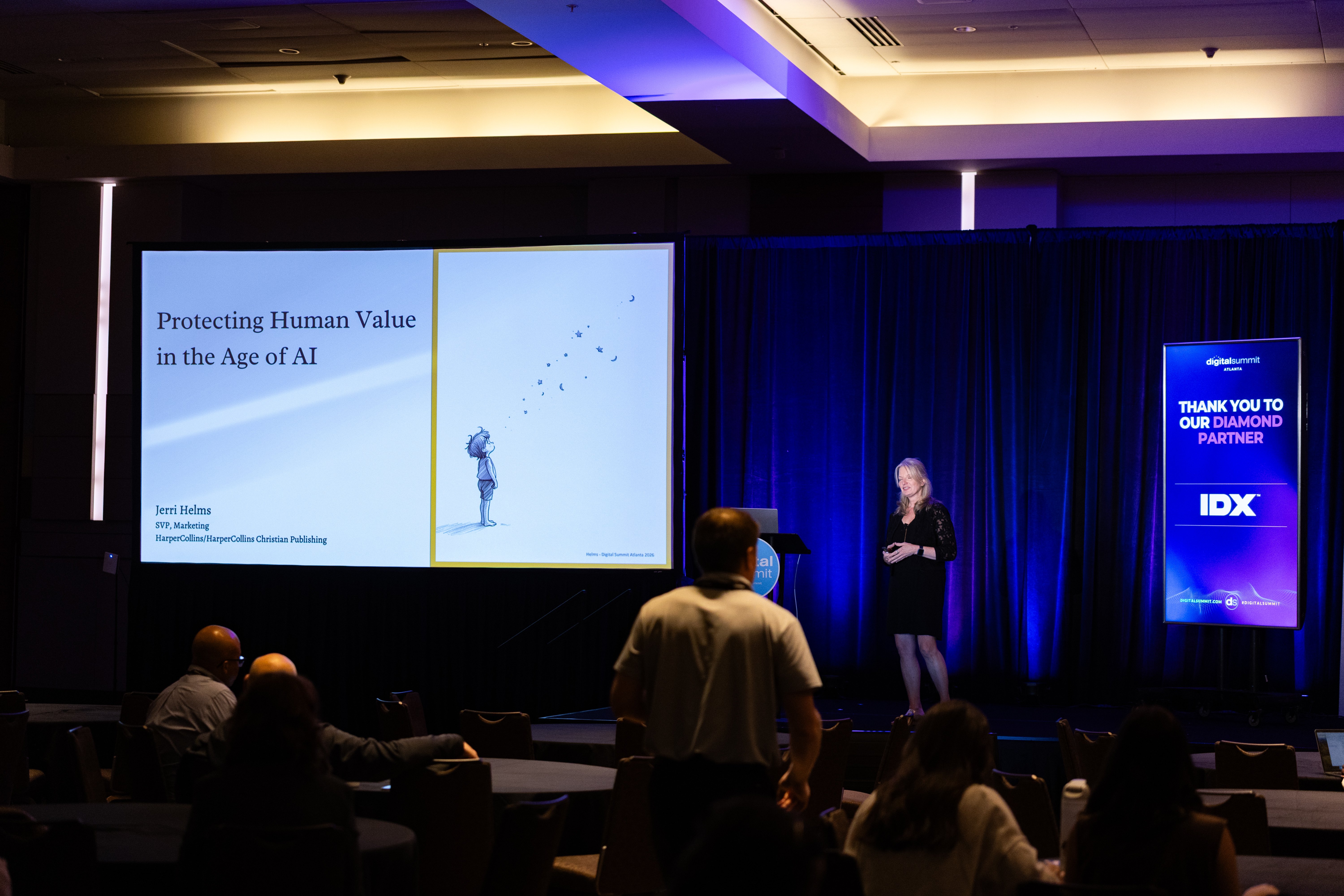 In book publishing, the product is human thought.
That makes the questions surrounding AI especially personal for Jerri Helms, who leads central marketing operations supporting teams at HarperCollins and HarperCollins Christian Publishing. The work depends on people having something worth saying, and readers believing there is a person behind the words.
But the question she brought to Digital Summit Atlanta reaches well beyond publishing: as machines become more capable, what makes your contribution valuable?
Helms uses AI herself. Her session focused on the decisions people make while using it: which questions they ask, when they challenge an answer, and how much thinking they hand over.
For marketers, those decisions affect the quality of the work. For leaders, they also influence whether a team keeps developing the skills it needs to create something distinctive.
Give Your Own Thinking a Place to Start
AI can make it easier to move from an assignment to a finished-looking answer. Helms encouraged attendees to pay attention to what happens in between.
Did you examine the problem? Consider another explanation? Decide what mattered to your audience? Could you explain why the final recommendation makes sense?
Her concern was the habit of reaching for a tool before reaching into your own knowledge and experience. When that becomes the default, the opportunity to practice judgment can disappear from everyday work.
For managers, this raises a question about what gets rewarded. Finishing more assignments may look productive, but Helms urged leaders to examine the thinking and creativity behind those assignments, too.
A team needs room to work through uncertainty, question a recommendation, and explain its choices. Those activities are part of producing good marketing.
Ask Questions Before Accepting the Answer
Helms’s most immediately useful AI habit was simple: ask the tool to ask you questions.
Before it proceeds with an assignment, have it clarify what you mean and what you want to accomplish. Its questions may reveal that it has interpreted the request differently than you intended.
That gives you a chance to correct the direction before a polished response makes the misunderstanding harder to notice.
She also encouraged attendees to keep questioning once an answer arrives. What assumptions shaped it? What context is missing? What would change the recommendation?
To give that practice structure, Helms drew on James E. Ryan’s book Wait, What?, applying its five questions to working with AI:
The questions offer a way to slow down just enough to make better decisions about what happens next.
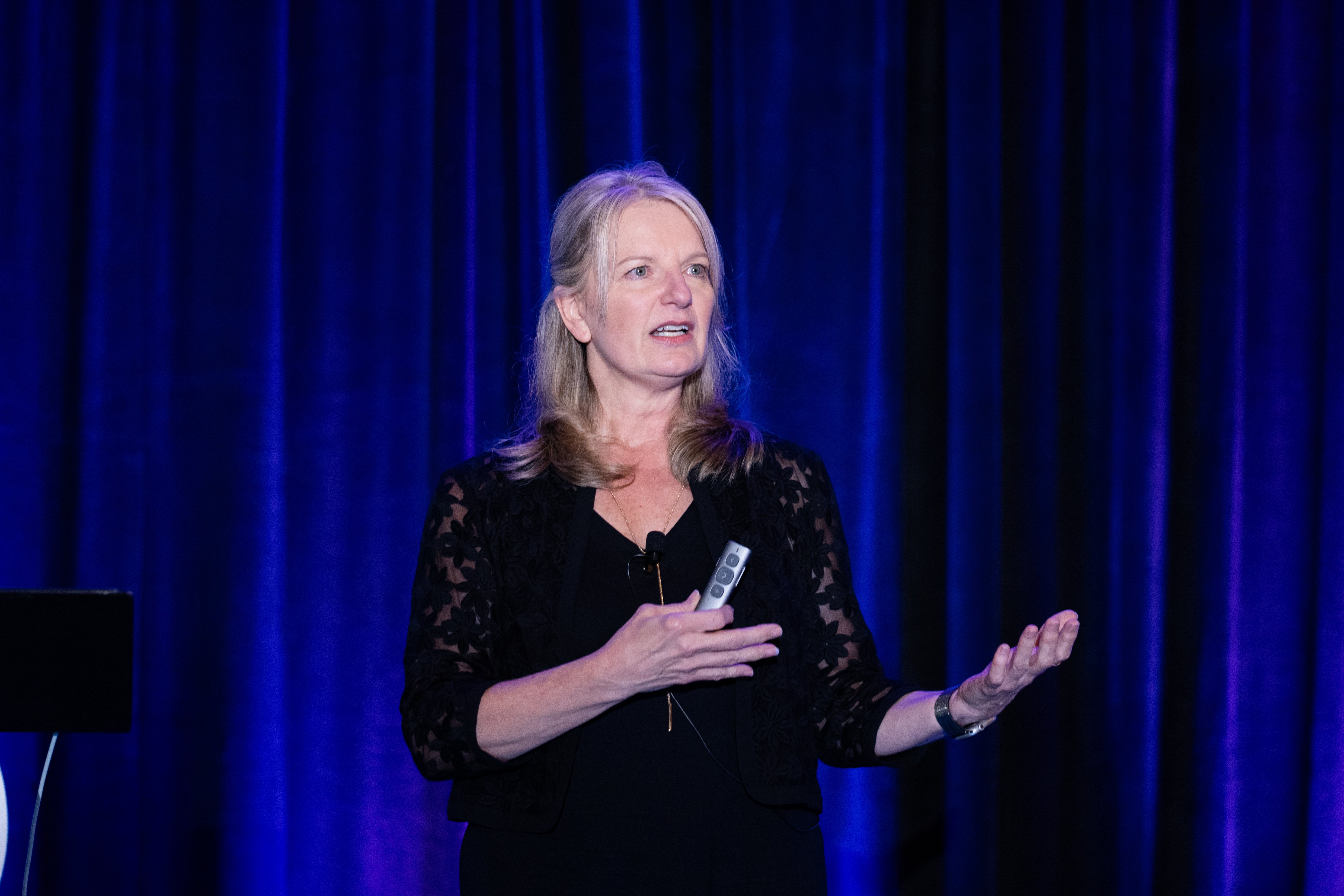 Make Curiosity Part of the Workweek
“Stay curious” is a familiar instruction. Helms gives it time on the calendar.
She asks her team to spend 15 to 30 minutes each week reading about something outside publishing, marketing, or editorial work. That time happens during work hours because she considers it part of the job.
The subject might be beekeeping, Formula 1, or something else entirely.
The exercise exposes people to different problems, ways of working, and perspectives. It also creates a regular opportunity to follow an interest without needing an immediate business application.
Helms practices this herself by attending conferences outside her industry. She wants to understand how other fields approach decisions and solve problems, then consider what those approaches might offer her own work.
She brings the same mindset to familiar subjects. At a conference, she looks for something she can add to what she already knows: a different method, a useful tool, a new connection.
Experience becomes more useful when it leaves room for another perspective.
Meet People Before You Know Their Titles
One of Helms’s most memorable examples involved a dinner where guests could share their first names but could not discuss their jobs, professional backgrounds, or credentials.
The restrictions changed the conversation.
Without titles to guide them, guests had to discover who people were by asking questions and spending time together. Later, they tried to guess one another’s professions. According to Helms, they were consistently wrong.
One person she had cooked alongside turned out to be a James Beard Award-winning chef. He had deliberately chopped with his other hand to avoid giving himself away.
The experience made Helms reflect on how often professional networking begins with a goal and an assessment of someone’s status.
Her challenge to attendees was to enter different circles and make room for discovery. Conversations become more interesting when you have something to learn about the person in front of you.
Those encounters can also expand the experiences and perspectives you bring back to work.
Look for the Problem Behind the Request
Helms used the development of Swiffer to illustrate why observation and curiosity matter alongside data.
In her telling, research suggested people wanted a lighter mop. Watching people clean their homes revealed another frustration: repeatedly putting a mop into dirty water, then carrying that water back across the floor.
That observation changed the question. What would happen if the process no longer needed a bucket?
The example showed how an accepted description of a problem can limit the solutions a team considers.
Marketers encounter similar situations. A request arrives for another campaign, a new piece of content, or a different message. Before producing it, someone needs to ask what is happening and whether the proposed work addresses the underlying need.
Data can help inform that decision. So can watching, listening, and questioning an assumption that everyone has grown comfortable with.
Hire for How People Explore and Decide
Helms encouraged leaders to look beyond proficiency with a particular platform when hiring. Tools change. A person’s approach to learning and uncertainty deserves close attention.
She described hiring someone into a role focused on identifying microtrends. His curiosity showed up throughout his life, including running trivia nights and reaching the final selection round for Jeopardy! multiple times.
But his judgment mattered, too. Helms valued his ability to recognize when a line of inquiry was going nowhere and change direction.
To explore those qualities in an interview, she suggested asking about something a candidate taught themselves, an interest outside their field, or an experience that took them beyond their usual habits.
Listen for what prompted their interest, how they pursued it, and what they learned.
She also shared a “traffic light” exercise for existing teams:
One person’s red may be another person’s green. Understanding those differences can help a leader make better decisions about responsibilities and roles.

What To Do Right Now
The Bottom Line: Keep Human Judgment in the Work
Helms returned throughout the session to the value of perspective: the knowledge, experiences, questions, and choices each person brings to an assignment.
A tool can contribute to the process. The responsibility for deciding whether the result is useful, thoughtful, and appropriate still belongs to the people doing the work.
Her closing challenge was to protect that capacity in yourself and your team. Keep asking questions. Follow interests beyond your immediate responsibilities. Examine the answer that seems obvious.
And give your curiosity enough room to change what you create.
Watch the Full Session
This article was adapted from Protecting Human Value in the Age of AI, presented by Jerri Helms at Digital Summit Atlanta, October 2026.