Education
Digital Summit Recap
November 2026

About this article:
The Art of Fandom focuses on what it means to be a genuine fan — of a team, a brand, an artist, or cultural moment, and how that devotion has shaped the way they build brands, connect with audiences, and make work that actually moves people.
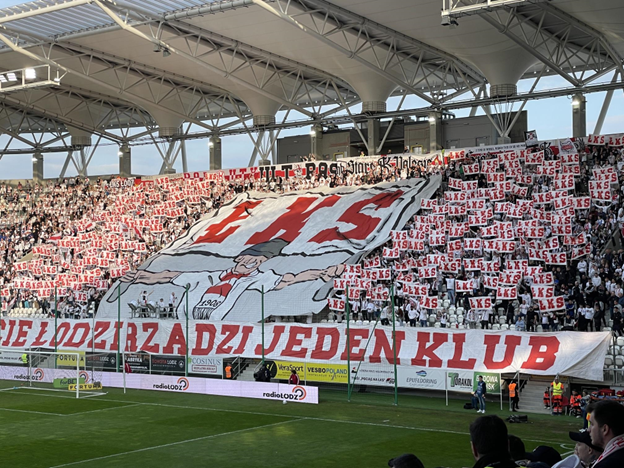
I grew up in Bałuty, a working-class neighborhood in Łódź, during the last years of communist Poland in the 80s. In that part of the city, supporting ŁKS Łódź wasn’t a hobby. It was closer to a birthright.
I started going to games as early as I can remember. I didn’t miss any, rain or snow. When the team won the Polish championship in the early 90s, I was there. I watched them play teams like Manchester United (Beckham included). Those nights felt bigger than the stadium.
 Then life moved on. I left for the United States around the same time the club collapsed financially. It dropped to the lowest levels of Polish football. Once a champion, ŁKS fell to the sixth division, competing against semi-professional teams in the smallest towns in the country. Most people would have found another team or simply stopped caring.
The fans and the local business community didn’t. They stepped in, rebuilt from the bottom, and slowly climbed back into the major leagues. It’s taken many painful years, the struggle continues today. I’ve stayed with them the entire time.
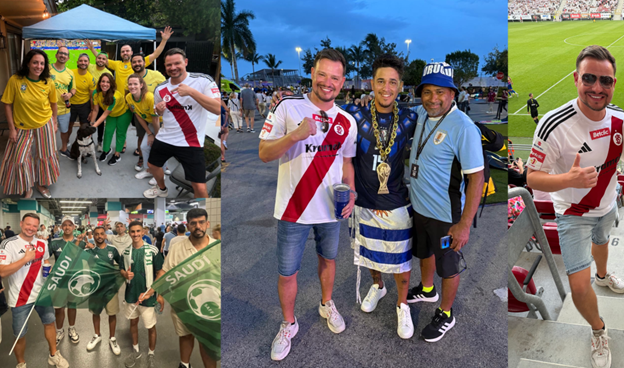
I still catch every match I can, usually early Saturday morning, laptop open, VPN on. From the next room my wife laughs. “Shouldn’t you be watching Messi playing for Inter Miami where you live instead of the Polish second division?” she would say teasingly. “You get angry every time they lose.” She’s probably right.
When I visit Poland, I plan the trip around the fixture list. I buy their new jersey every season. I go the game. Twenty-plus years after leaving the country, the habit hasn’t faded or changed one bit.
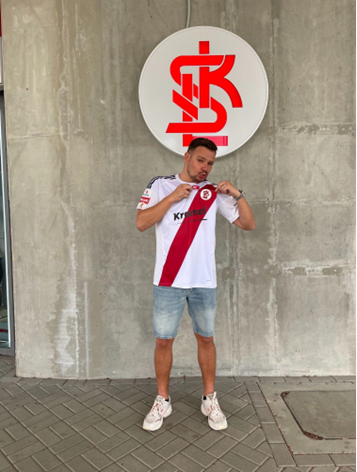 That kind of attachment looks irrational from the outside. From the inside, it has been one of the most consistent forces in my life. It has also quietly shaped how I think about brands, audiences, and the business I run.
Here are my four lessons from the stands:
Loyalty is measured in the lower leagues, not the championship seasons. Anyone can show up when the team is winning, and the atmosphere is electric. The real signal is whether you are still there when the stadium is half-empty, and the result feels inevitable.
In business, the same pattern appears. Clients, teammates, and partners reveal themselves in the hard months, not the easy ones. The people who stay when the work is unglamorous become the ones you can actually build with.
The most durable brands are co-owned by the people who care. When ŁKS went bankrupt, the owners could no longer carry the club. The fans and the surrounding business community effectively took it back and kept it alive.
That is not a romantic story; it is a practical one. Brands that treat their audience as pure consumers tend to be fragile. Brands that create real ownership (through participation, transparency, and shared stakes) survive the moments when capital and attention dry up.
Rituals keep the connection alive when the results do not. Buying the most recent jersey, aligning a trip around a game day, waking up early to watch a match that almost no one else in my life cares about — these are small, repeated acts. Over the years, they become the actual substance of belonging.
Marketing often chases the big moment. The quieter work is designing small, reliable rituals that make people feel part of something, even when nothing spectacular is happening.
In the SEO work I do, the temptation is always to chase the traffic jump that looks impressive in a clinet report. What actually compounds is closer to the small, repeated habits, such as consistently publishing and refining content around the topics that matter. You often need to stay consistent for months before you start feeling the impact.
Brand identity is local before it is scalable. Bałuty in Łódź produced a particular intensity of support because the club was woven into the neighborhood’s sense of itself. The attachment was intense, almost stubborn.
When you later try to build something that reaches beyond its original place — a company, a product, a team — the groups that hold together longest usually still contain that original local density. They know who they are before they try to become everything to everyone.
The same idea shapes how I run the Alphametic team in Miami. We make a point of doing things together outside of work, including going to Inter Miami games to watch Messi play!
It is a small, local ritual, but it creates the kind of shared density that makes a group feel like it actually belongs together before it tries to scale.